

Do You Have to Have a Smart Water Meter?
2025-09-29
LoRaWAN Applications and Real-World Uses
2026-01-27Most billing problems don’t start at the invoice.
They start earlier, when a billing run is approaching and meter reads are already missing or delayed.
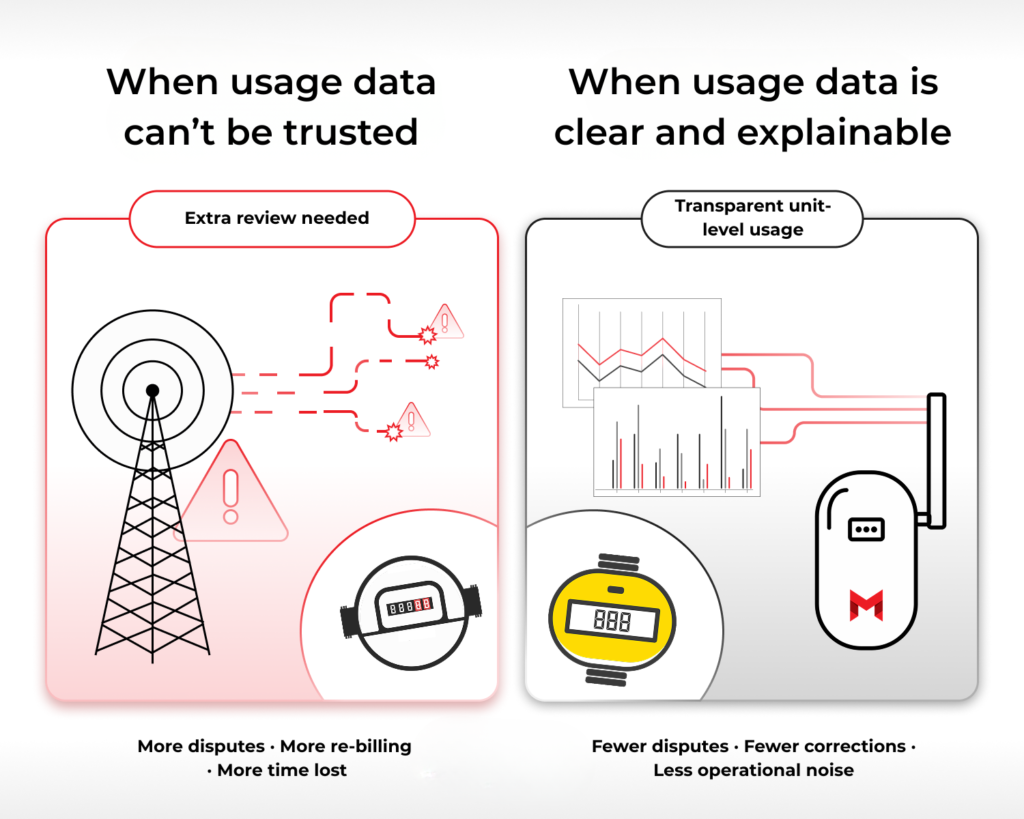
The operational impact of unreliable vs. explainable usage data
What should have been routine turns into extra checks. Invoices go out, and the follow-up begins. None of this feels exceptional. It feels like the job. And that’s often why the real cause gets missed.
Billing systems don’t create these problems. They inherit them from the systems behind them.
When data arrives late, has gaps, or important issues like leaks go unnoticed, manual work becomes unavoidable – not because billing logic failed, but because the data can no longer be trusted.
From what we see, across companies that provide billing services, the same upstream patterns tend to repeat.
Data often comes from systems that rely on estimates, and issues between readings go unnoticed. When reads are missing, billing systems have to estimate usage and distribute it to residents.
By the time issues appear, billing teams are already responding weeks after the problem began.
From our perspective, this is what accountable measurement looks like in practice – a system where reliability is built step by step, before billing begins.
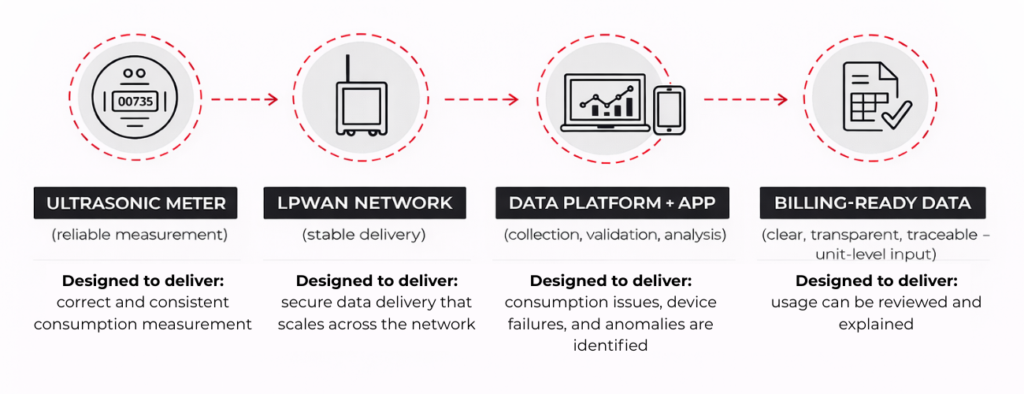
How reliable usage data reaches billing
This is where reliable data actually matters, when uncertainty becomes visible early.
Predictable data delivery, basic validation before billing, and clear traceability don’t change billing logic. They change how much extra work billing teams are forced to take on.
And when that extra work drops, so do exceptions, escalations, and the constant need to explain numbers that no one fully trusts.
Most billing problems don’t start at the invoice. They start months earlier – in the data.
In the coming months, we’ll continue exploring how accountable data shapes day-to-day operations upstream.