


Apartment Water Leak Detection: How Property Managers Can Reduce Damage and Water Loss
2026-09-16
How to Choose a Water Submetering Provider for a Manufactured Housing Community
2026-09-17Choosing between smart water meters and leak detection sensors is a common decision for property managers after a serious water loss. The two technologies may appear similar in a demonstration, but they solve different problems.
A leak sensor detects water only when moisture reaches its probe or sensing cable. A smart water meter measures the volume passing through a pipe and can identify unusual consumption patterns. This allows one system to support leak monitoring, consumption reporting, and, when each unit is properly metered, resident billing.
The right choice depends on the property’s needs.
Key Takeaways
- Smart water meters and leak sensors detect different conditions. Meters identify unusual flow, while sensors identify moisture at a specific location.
- Flow monitoring can reveal running toilets and other hidden fixture leaks that may never reach a floor sensor.
- Leak sensors can be effective in the water sensitive areas (bathrooms, basements, under the sinks, etc.)
- For many multifamily properties meters provide the main monitoring layer while sensors add local protection where needed.
Smart Water Meters vs. Leak Sensors Overview
| Factor | Smart water meter | Leak detection sensor |
|---|---|---|
| Detection method | Measures water passing through a metered pipe | Detects moisture touching a probe or sensing cable |
| Hidden fixture leaks | Can identify continuous or unusual flow | Usually cannot detect a leak unless water reaches the sensor |
| Consumption data | Records measured water volume | Does not measure consumption |
| Leak location | Identifies the affected unit or metered pipe | Identifies the specific area where the sensor is installed |
| Installation | Requires plumbing installation | Placed near selected risk points |
| Best use | Property wide monitoring, billing, and consumption analysis | Local protection for the water sensitive areas |
What Is the Difference Between Smart Water Meters and Leak Sensors?
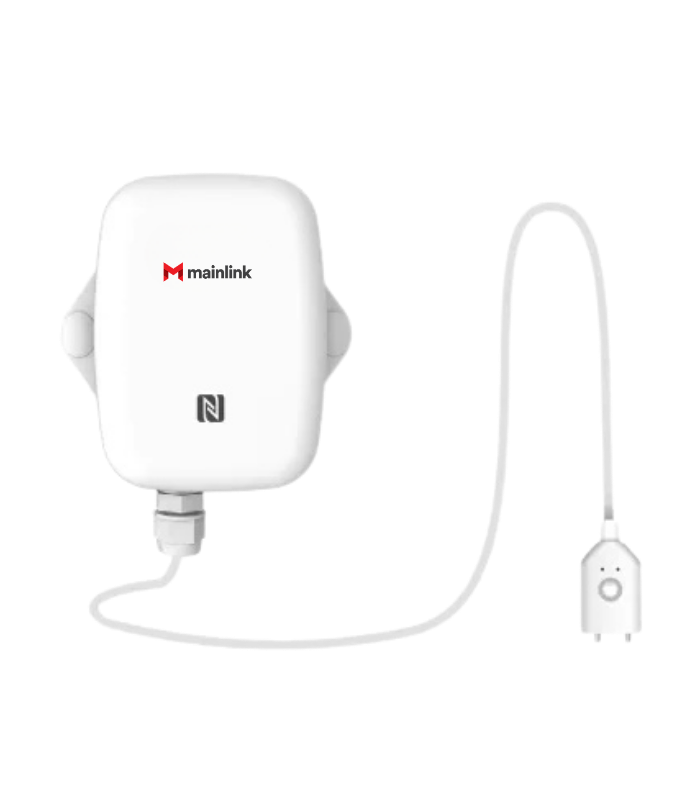
Smart water meters are devices that record the volume of water passing through a pipe and transmit readings to a management platform. Leak detection sensors are point devices placed near a fixture, appliance, or floor area. They trigger an alert when water reaches the sensing surface.
Placement determines what each system can see. A meter sits in the water path and monitors consumption. A sensor sits beside the water path and detects escaped water at its location.
A smart meter does not always identify the exact fixture causing a leak. It usually narrows the issue to a unit or metered pipe. A point sensor provides more precise location information, but only within its coverage area.
What Do Standalone Leak Sensors Detect?
Standalone sensors are useful under water heaters, beneath dishwashers, near washing machines, under the sinks in the basement, around mechanical equipment. A correctly placed sensor may provide an immediate alert when water escapes directly onto it.
The main limitation is coverage. A point sensor protects only the area within reach of its probe or sensing cable. A leaking toilet flapper, dripping faucet, or pipe leak inside a wall may produce no alert if water never reaches the device.
Coverage costs also rise with every protected location. A large apartment property may need several sensors per unit, plus devices in shared rooms. Property managers should account for installation, connectivity, battery maintenance, replacement, and alert management across the full portfolio.
Sensors also provide no consumption record. They cannot allocate water costs, compare master meter and unit totals, or explain changes in a resident bill.
What Do Smart Water Meters Detect That Sensors Miss?
Smart water meters monitor flow patterns rather than visible moisture. This lets them identify leaks that stay inside a fixture or drain without creating standing water.
The QALCOSONIC W1 ultrasonic water meter can register flow as low as 0.04 GPM. Its lack of moving measuring parts reduces mechanical wear, while battery life can reach up to 16 years depending on communication settings.
Mainlink’s smart metering platform uses meter data to flag continuous flow, sudden increases in volume or low temperature conditions. Continuous flow can indicate a running toilet or dripping supply line. A sharp increase can indicate a burst event. A low temperature warning can alert property teams to freezing risk.
Detection timing depends on transmission frequency, platform settings, and alarm thresholds. A meter may reveal abnormal consumption before water reaches a point sensor, while a sensor placed directly below a failed appliance may respond sooner when water escapes onto it.
What Do Mainlink Deployments Show?
At Irvine Campus Housing Authority community where local partner installed 1,726 ultrasonic meters which revealed previously undetected leaks that older analog meters had not registered, allowing both residents and management to identify and fix issues such as slow leaks and intermittent irrigation system failures. With access to daily and hourly consumption data, abnormal usage patterns were quickly identified and addressed. As leaks were repaired, the community’s overall water consumption declined significantly from an average of about 310,000 gallons per day in September to roughly 255,000 gallons per day by February.
In a Gdańsk multifamily project, the system identified unusual consumption in three apartments. One leaking toilet had already wasted about 79,250 gallons over several months, representing more than $750 in accumulated losses. The alert exposed the existing loss and helped prevent further waste. The team addressed two smaller leaks before they became more expensive.
When Leak Sensors Are Needed?
When and Where to Use Leak Sensors: Old Plumbing or Appliances: Use sensors if your home has aging pipes, older washing machine hoses, or agiing water heaters prone to sudden failure.
Hidden or Unfrequented Spaces: Install them in basements, crawl spaces, empty vacation homes, or behind toilets where slow leaks can go unnoticed for days.
High-Value or Sensitive Rooms: Place them near server rooms, multi-unit apartment complexes, or rooms with expensive flooring and finished ceilings below.
Do You Need Water Meters Only, or Meters and Leak Sensors?
The practical decision is not meter versus sensor. It is how many monitoring layers the property needs. Mainlink supplies leak detection as a complete system: water meters, leak sensors, the communication network and the AMI platform. A property that takes all four gets layered leak detection solution. The meter identifies constant flow, the platform raises an alert when consumption behaves abnormally and monitors the pattern, and the leak sensor gives the resident an immediate warning that water is escaping inside their apartment.
Start with five questions.
Do You Bill Residents for Water?
Leak sensors cannot support consumption based billing because they do not measure water volume. Billing requires a meter for each unit or separately billed supply line, along with compliance with applicable state and local metering rules.
A water submetering system combines unit level measurement from ultrasonic meter with remote readings, reporting, and billing data.
What Rules Apply to the Property?
Commercial measurement requirements vary by jurisdiction. The NIST Handbook 44 water meter requirements include provisions for meter indications and customer access. Property owners should confirm the applicable interpretation with the relevant state or local weights and measures authority.
Mainlink states that its certified meter and resident app provide the required visibility for its California deployments without separate wall mounted displays. Still review this for each property and jurisdiction.
Also check local building codes and insurance policies. Some insurers set conditions around water leak detection equipment, and requirements differ by carrier and jurisdiction. Confirm with the property’s insurer before treating this as a cost factor.
How Do Residents Currently Find Out About Leaks?
This question separates the two layers more clearly than any specification sheet.
If maintenance teams regularly take calls from residents reporting a flooded apartment and asking for the water to be shut off, the property is finding out about leaks after damage has already happened. If residents are frequently away from the apartment, nobody is in the room to notice and the loss continues until someone returns or a neighbor notices. Both patterns end in the same place: property damage plus a high water bill.
Meter data closes the second gap, because abnormal consumption shows up on the platform whether or not anyone is home. Leak sensors close the first, because the resident receives the alert directly and can shut off the water or call maintenance immediately rather than discovering the problem on the floor. Giving residents visibility of their own unit level consumption also changes who is watching: the property team is no longer the only party able to react.
How Many Areas Need Protection?
Count every fixture, appliance, mechanical room, riser, and shared space that would require a sensor. Then compare the full cost of that coverage with the cost of installing meters at the unit or pipe level.
Sensors may remain economical for a few critical areas. As the number of devices grows, installation and maintenance can become more complex. The usual outcome is meters at every unit for continuous visibility, with sensors concentrated where escaped water would be most expensive.
Do You Need Data or Only Alerts?
Leak alerts answer whether a possible problem exists. Meter data also shows how much water was used, when the pattern changed, which unit or pipe is affected, and whether total submeter consumption aligns with the master meter.
This data can support billing, conservation programs, capital planning, and non revenue water analysis.
Why Does Mainlink Stand Out?
Mainlink combines ultrasonic meters, LoRaWAN communication, the Mainlink smart metering platform, and resident access through a mobile app. Also, combines meter data management and head end functions and provides an API for third party integrations.
The system is ready to deploy, meaning it’s preconfigured and can be easily installed by a submetering company or other contractor. Mainlink’s solution for leak detection is comprehensive, layered in 3 steps: ultrasonic meter, leak sensor, smart metering platform.
Mainlink places a strong focus on system security, with independently audited information security practices and platform hosting that follows European data protection requirements.
Frequently Asked Questions
Can Smart Water Meters Replace Leak Sensors Entirely?
No. Smart meters can provide the primary monitoring layer for water flow to the unit, but leak sensors remain useful where exact moisture location matters.
Do Leak Sensors Help With Resident Billing Disputes?
Leak sensors don’t record volume or provide consumption history on their own. However, when integrated with Mainlink’s monitoring system, a detected leak also appears as abnormal consumption in the metering data. Together, the system provides two layers: unit-specific consumption data for billing accuracy and instant leak notifications for early intervention.
How Quickly Do Smart Meters Detect a Leak?
Timing depends on the event type, communication interval, and configured alarm threshold. Sudden increases may be identified quickly, while low level continuous flow may need to persist before an alert is generated.
What Does Ultrasonic Measurement Change Compared With Mechanical Meters?
Ultrasonic meters calculate flow using sound signals and do not rely on moving measuring parts. This avoids wear caused by mechanical movement and improves sensitivity at low flow.
Is a Hybrid Approach Worth the Cost?
Yes. A practical approach is to meter each unit and install leak sensors in water-sensitive locations for maximum property protection and water conservation.
Next Step
The right choice depends on the number of units, the billing model, plumbing access, local metering requirements, and the areas where water damage would be most costly. Property managers should compare complete system costs rather than device prices alone and decide whether they need local alerts, measured consumption data, or both.
To review the requirements for a specific property, talk to the Mainlink team.