


Smart Water Meters vs. Leak Detection Sensors: Which Solution Is Right for Your Building?
2026-09-17
LoRaWAN Compatible Smart Water Meters: Technologies, Benefits, and Selection Criteria
2026-09-17Manufactured housing water submetering means placing a meter on each lot service line, collecting readings remotely, and billing residents for the water they use rather than dividing one master meter bill across the community. The decision differs from apartment submetering because homes are spread across a larger area and meters are often installed outdoors.
Choose a provider that can offer easy-to-install all-in-one solution including waterproof meters, reliable communication coverage, provide access to water consumption platform, and can integrate data for billing.
Key Takeaways
- Start by assessing your own situation: how tenants are billed today (RUBS or individual submeters), whether residents complain about high water bills, and whether the current meters need maintenance or replacement investment.
- Confirm that every lot has its own accessible and isolatable service line. This decides whether submetering is technically possible before any pricing conversation.
- Specify meters for the actual pit conditions, including flooding, silt, frost, pipe material, and available space.
- Question providers on the substance behind the offer: what measurement technology they use and how reliable it is, what references they can share from comparable manufactured housing projects, and how the meter data management platform works day to day.
- Choose a solution provider that can give plug-and-play solution from meters, communication network, data platform, billing integration, and resident access within one complete system.
- Put data ownership, export access, service response, and installation acceptance terms into the contract.
What should you prepare before speaking with providers?
Start with a site map that identifies every lot, shutoff, city service line, and meter pit. Add twelve months of master meter bills, an inventory of pit depths and pipe sizes, the lowest expected winter temperature, and the name of the billing or property management system that will receive the readings.
The master meter history creates a baseline for comparing property consumption with the sum of the lot readings. The difference should first be treated as a master meter variance, not automatically as a leak. Common area use, irrigation, vacant lots, measurement timing, and distribution losses can all contribute.
Legal research should also begin before equipment selection. Requirements vary by state, local authority, utility, property type, and billing method. Confirm who regulates the arrangement, which charges may be passed to residents, whether the meter needs commercial approval, and whether residents must be able to view their consumption.
| Evaluation area | What the provider should supply | What it helps you decide |
|---|---|---|
| Site readiness | A lot map, pit inventory, pipe details, and a list of shared or inaccessible lines | Whether every lot can be billed separately |
| Compliance | Exact meter certificate details and an explanation of billing requirements | Whether the proposed system can support resident billing |
| Coverage | Logged readings from representative and difficult locations | The number and placement of gateways |
| Meter suitability | Specifications for accuracy, starting flow, submersion, temperature, and battery life | Whether the equipment suits outdoor pits |
| Data access | Platform name, integration method, export format, and ownership terms | Whether data can move into billing systems and remain available |
| Provider capability | Similar project references, installation plan, warranty, and support terms | Whether the provider can deliver and maintain the system |
| Total cost | A five year and ten year cost schedule with every recurring charge | Which proposal offers the best long term value |
How do you choose the right provider?
1. Confirm that each lot can be measured separately
Walk the property and verify that each home has an individual service connection that can be isolated. Some older communities have shared lines serving more than one home. Those lines must be separated before individual billing is possible. Alternatively, install additional water submeters so the software can calculate each unit’s consumption separately.
The provider should produce a numbered list of ready lots, inaccessible lots, shared lines, and plumbing work required before installation. Plumbing corrections should be priced separately.
2. Require a network propagation study
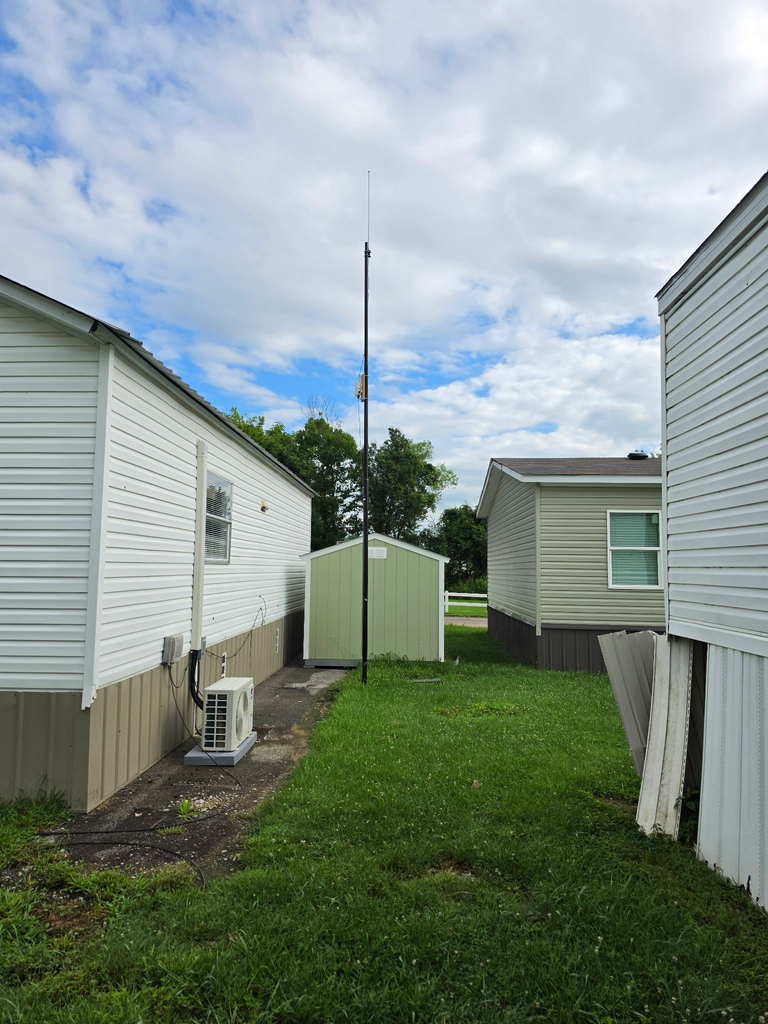
A manufactured housing community can include long distances, elevation changes, metal structures, vegetation, buried pits, and difficult gateway locations. These conditions matter more than a range figure from a product sheet.
A network propagation study accounts for them. Mainlink engineers evaluate the terrain and layout and determine how many gateways are needed to cover the full site. Ask the provider to test proposed gateway locations and carry a test device to the farthest and most obstructed lots. The final study should record test locations, signal results, expected read reliability, gateway count, and areas that require another design approach.
The provider should also explain how it recovers missed readings and reports offline devices.
3. Match the meter to the pit conditions
Outdoor pits may flood, collect silt, freeze, or provide little working space. The proposal should state the meter submersion rating, operating temperature range, freeze alert settings, accuracy range, starting flow, battery life, installation orientation, and required pipe conditions.
Ultrasonic meters have no mechanical measuring parts, but not every ultrasonic model suits every pit. Compare the specifications for the exact product being quoted.
The pit survey should confirm pipe material, diameter, fitting type, depth, drainage, lid material, and available clearance. Installation time is often driven by pit access and plumbing differences rather than the meter.
4. Evaluate the provider, not only the equipment
Ask how many manufactured housing communities the provider has completed and request references from properties with similar lot counts, climate, pit conditions, and site density. Apartment references do not prove experience with outdoor pits and long distance coverage.
Confirm who performs the survey, plumbing, installation, commissioning, platform setup, and resident support. If subcontractors are used, clarify who remains responsible for quality and delays.
The contract should define installation acceptance. Every meter should be mapped to the correct lot, verified for flow direction, connected to the platform, and tested before the project is signed off.
Also request written warranty terms, replacement procedures, support hours, response targets, and training.
5. Check where the data goes and whether it remains yours
A smart metering system includes the meters, communication network, gateway, data platform, billing connection, and resident interface.
Ask which platform stores the readings, how frequently they are collected, and how the billing system receives them. A documented API supports automatic exchange, while a structured CSV export may be enough for simpler billing.
The contract should allow export of historical and current interval data and explain what happens when the property is sold, the billing company changes, or the service ends.
6. Compare the full cost over five and ten years
Use the same cost table for every proposal. Include meters, gateways, transceivers, repeaters, resident displays, installation, platform, network fees, support, replacement, and billing integration.
The more hardware a property needs to install, the more costs add up across equipment, installation, and long-term maintenance. Mainlink’s solution eliminates this complexity: it requires no intermediate hardware and consists of only a meter and a gateway.
Property managers should select the most effective solution.
Should a community keep RUBS or move to water submetering?
RUBS allocates the master bill using a formula such as resident count or home size. Submetering charges each lot according to measured consumption.
RUBS has little equipment cost and may be the only practical option where individual service lines do not exist. Its limitation is that it cannot identify which lot produced unusual consumption. With lot level submetering, continuous flow can be connected to a specific meter and investigated.
The EPA WaterSense program reports that nine percent of homes have leaks wasting at least 50 gallons per day. In a formula billing system, that loss is shared across residents. With water submetering for each lot, it can be assigned to the location where the consumption occurred and addressed more quickly.
The final choice must still account for local billing rules, service line access, installation cost, and resident communication.
What mistakes should you avoid?
Buying on meter price alone. Include the complete communication, data, installation, billing, and support stack.
Skipping the coverage survey. Problems found after installation often require added hardware, gateway relocation, or manual work.
Accepting a certificate claim without checking the model. Approval should match the exact meter and size.
Using vague leak detection language. Ask what flow pattern triggers an alert, how long it must continue, and who receives it.
Ignoring residents. Explain how readings become bills, where usage is visible, how leaks are communicated, and how disputes are handled.
Leaving acceptance and support undefined. Every device should be mapped, connected, tested, and documented.
When should you bring in a specialist?
Specialist support is useful when the property has shared lines, unclear billing rules, difficult radio conditions, several pit designs, or enough lots that gateway quantity changes the financial case.
An assessment should establish which lots are ready, what compliance rules apply, how the network will cover the property, and what the complete ownership cost will be.
Frequently Asked Questions
How long does installation take?
The schedule depends on pit access, plumbing consistency, weather, and corrective work. A provider should estimate it after inspecting representative pits and identifying shared or inaccessible service lines.
Can only part of the community be submetered?
Yes, but the billing policy must explain how measured and formula based charges will operate during the transition.
Can lot meters find leaks in community distribution mains?
Not directly. A lot meter measures water entering that lot. Distribution losses may appear within the difference between the master meter total and aligned lot readings after authorized common use is removed.
What happens to the data when the community is sold?
That depends on the contract. Data ownership, export access, retention, and transfer should be agreed before installation.
Where to Go From Here
A sound procurement process follows a clear order: confirm the plumbing, verify the billing rules, test the meters and communication, specify equipment needs, evaluate the provider, and compare the full ownership cost.
For a closer look at the hardware, connectivity, platform, and resident access that form a complete submetering solution, review the full system before comparing individual meter prices. Confirming these requirements early reduces expensive changes during installation.