


Do You Have to Have a Smart Water Meter?
2025-09-29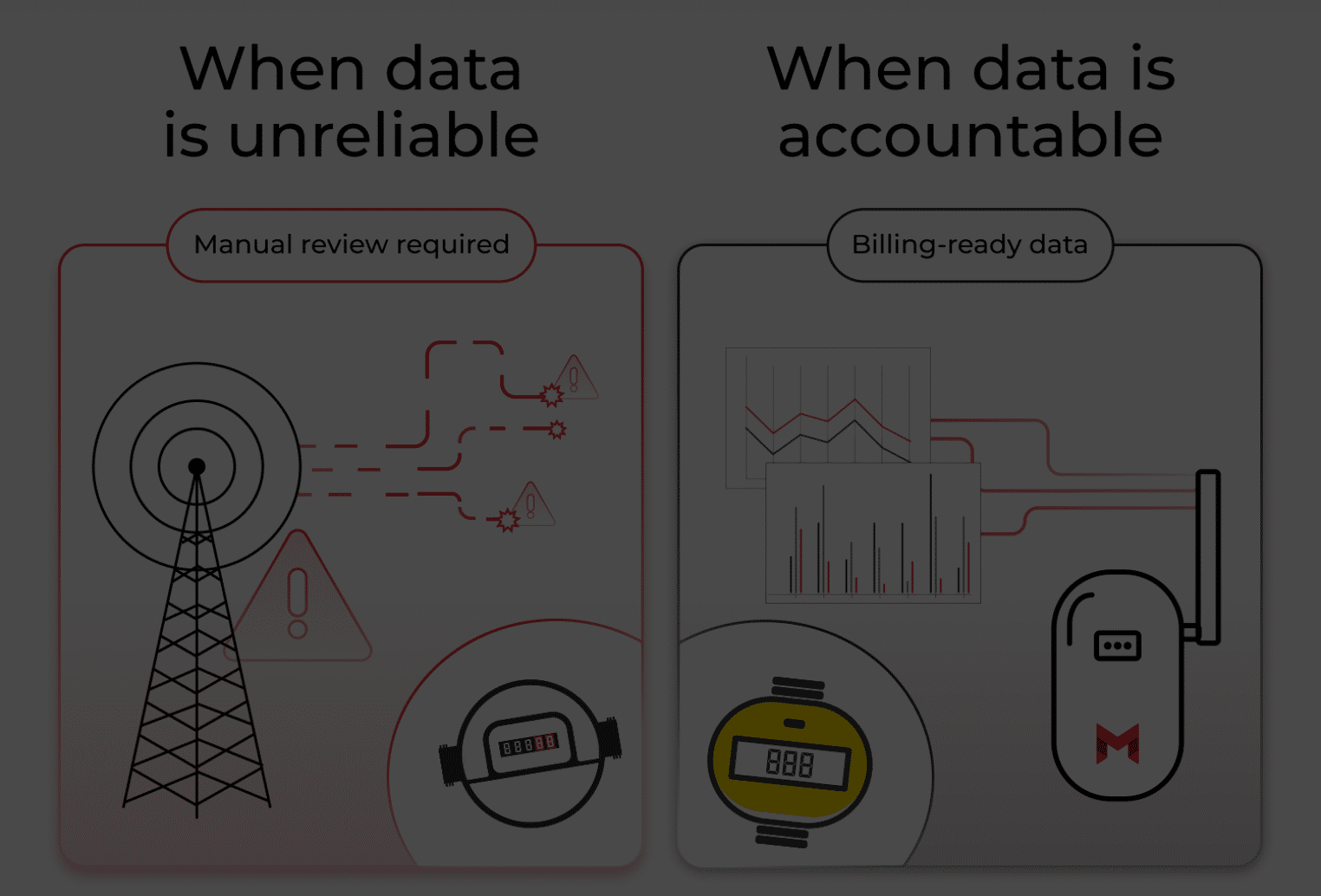
Most Billing Problems Don’t Start at the Invoice
2026-01-14Landlords and property managers often struggle with one persistent issue: how to manage water usage fairly when residents share a single master meter. Property owners must cover rising utility costs, yet traditional billing methods especially RUBS offer no visibility into actual consumption. This leads to frequent disputes, inconsistent recovery of water expenses, and operating budgets that absorb costs that don’t belong to the building. Water submetering addresses these gaps by measuring each unit’s real usage and enabling accurate, transparent billing.
Submetering is a practical and effective solution to this problem. It allows landlords to pass on water costs to those who generate them, while tenants are held personally accountable for their own water consumption. By allowing for transparent billing, tenants understand how their water consumption directly results in changes to their billing, and the scope for tenant-landlord and tenant-tenant disputes decreases.
In this article, we will discover how submetering works, its benefits for both landlords and tenants, and how to implement a lasting, practical, and effective submetering solution.
What is Apartment Water Submetering?
Water submetering refers to measuring each apartment’s water use individually rather than relying on one master meter for the whole building. In most traditional setups, a single master meter tracks total consumption, and the building recovers costs by allocating that total across residents – often through a RUBS formula or by including water in the rent. In these cases, the owner pays the full water bill and absorbs the impact of overuse, leaks, or rising utility costs because the charges are not tied to actual apartment unit consumption.
Submetering is fundamentally different. The simplest way to think of apartment water submetering is that there are water submeters in each apartment. The apartment building still has a master meter for the building that tracks the building’s overall use, but each unit in the building has its own individual water meter to track the apartment’s consumption. This allows each unit to be billed for its own specific consumption, passing water costs from the landlord to the tenants who generate them.
Modern submetering technologies make it possible to measure each unit’s actual water consumption, removing the need for RUBS allocation in buildings that adopt individual metering. With IoT connectivity such as LoRaWAN, NB-IoT today’s smart submeters support automated remote reads, advanced leak detection, and real-time alerts – features that help owners reduce risk and improve billing accuracy.
How Water Submetering Works in Apartment Buildings
Submetering in apartment buildings is conceptually straightforward. The main water line still enters the property as usual and supplies each unit through the existing plumbing system. The difference is that every apartment has its own submeter that measures that unit’s individual water use. When smart submeters are installed, they transmit this data to a central platform for processing and billing.
Submetering does not inherently require smart technology, but IoT-enabled systems greatly expand what owners and managers can achieve. Modern smart submetering platforms automatically collect high-frequency meter data, allowing remote readings, advanced leak detection, anomaly alerts, and accurate consumption reports for billing – capabilities that traditional mechanical meters cannot offer.
Benefits of Apartment Water Submetering for Property Managers
Installing a comprehensive smart water submetering solution is a project every property should plan carefully. With the right partner, one who understands the entire chain from the meter to the network and beyond each step of the project is executed thoughtfully. Once implemented, property managers begin to see the benefits immediately. Modern smart submeters help address longstanding challenges in water management for apartments and multi-unit buildings, including water cost recovery, maintenance planning, and even tenant satisfaction.
| Water cost recovery | Smart submetering ensures that the full cost of water used on the property is recovered through accurate, unit-level billing. Instead of absorbing utility increases or spreading costs evenly across all residents, submeters capture each unit’s actual consumption and feed that data directly into the billing process. This eliminates losses from flat-rate billing, estimated reads, or unnoticed leaks. As a result, operating budgets become more predictable. |
| Reduced water waste | When residents are billed for their actual water use, consumption typically decreases. Individual accountability reduces unnecessary usage, lowers building-wide water waste, and supports sustainability goals. For property managers, this often translates into lower overall utility expenses, fewer strain-related plumbing issues, and a more efficient use of resources across the property. |
| Leak detection & efficient maintenance | Smart submetering provides landlords with a route to optimized and efficient maintenance. Early leak detection enables managers to intervene before minor problems can become major issues, helping to prevent costly water damage. Analytics and anomaly detection enable a more efficient use of maintenance resources, thereby reducing budgets and allowing for more targeted interventions. |
| Data insights | Comprehensive data collection enables landlords and managers to track consumption history at both the building and individual unit level, allowing for comparative insights and analysis. Long-term consumption trends and statistics can enable landlords to make informed, data-driven decisions about their water management and maintenance budgets. |
| Improved tenant relationships | Tenant–landlord disputes over billing are a common source of tension. Transparent, usage-based billing helps reduce these conflicts by showing residents exactly how their own water consumption affects their costs. When residents can monitor their usage through a mobile app, they gain control and clarity, leading to fewer misunderstandings and stronger, more cooperative relationships. |
Benefits of Apartment Water Submetering for Residents
Tenants also benefit from effective water submetering systems. While many benefits are of particular interest to landlords and property managers, tenants can enjoy fair billing, better awareness of their consumption, and even better-protected units.
| Fair, accurate billing | Billing disputes are a common source of frustration for both landlords and tenants. Many tenants feel that water costs are allocated unfairly, with some units paying for more than they use, while others pay for much less. Smart submetering puts an end to all that: by providing accurate, transparent, and, most importantly, individual unit billing for every unit, tenants pay for only the water they actually use. |
| Better awareness through data | With individualized billing based on accurate consumption data, residents gain control over the size of their water bill. If their usage is higher than expected, they can adjust their water habits accordingly. Thanks to comprehensive data collection from modern smart meters, residents can track their consumption through the mobile app. |
| Early leak detection | Through an early leak detection alert, tenants can enjoy peace of mind knowing that problems with their unit are detected early enough to be resolved quickly and easily. |
How to Get Started with Apartment Water Submetering
Adopting or upgrading a water submetering system is more straightforward than many property owners and landlords expect. Usually submetering service providers manage nearly the entire process – from site evaluation to installation, data management, and billing integrations. Property owners simply choose the right partner and define their goals.
1. Start by selecting a qualified submetering provider
The first step is choosing a reliable partner. A professional provider will evaluate your building, recommend the appropriate meter technology, data connectivity, and provide long-term support.
2. Installation and system setup
Certified technicians take care of the installation, commissioning, and network setup. Property owners are not expected to coordinate plumbers or contractors, the provider manages scheduling, installation quality, and compliance documentation.
3. Integration with billing and resident communication
Most providers integrate directly with billing systems or offer their own billing software. Providers typically support the communication process with residents by supplying onboarding materials that explain how billing works, how to access consumption data, and what changes to expect. Smart submetering upgrades do not require significant effort from onsite staff. Most of the transition is handled by the service provider, and the property receives ongoing support after the system is live.
Mainlink can help you get started. We offer a robust and comprehensive smart submetering solution, packed with a range of features. If you’re interested in taking the next step and exploring smart water submetering further, contact Mainlink today. We can help you design a system that meets your specific needs.
Overcoming Common Submetering Challenges
Both owners and residents sometimes have reservations about smart submetering. Adoption isn’t always smooth from this perspective, but the challenges that arise can be easily resolved by choosing the right partners and solutions. Typical concerns involve installation cost and returns on investment, gaining tenant buy-in, and data privacy and security.
| Installation Cost & ROI | Infrastructure upgrades across a whole building or a large portfolio of apartment buildings can represent a significant capital expenditure for any building owner. It’s natural to worry about costs and returns. Initial outlays can often be mitigated through various state, regional, or local incentive schemes. Returns can be difficult to measure as they depend on numerous factors. For an illustrative example, take the installation of our submetering system into a typical 200-unit apartment building in California. We estimate that installation of our system saves $49,500 compared with a traditional submetering setup — and that’s without savings from ongoing maintenance. |
| Tenant Buy-In | Many tenants can be resistant to change, especially if they perceive themselves to be getting a better deal with the existing system. Some tenants distrust the meters themselves, while others worry about higher bills. Through clear communication, transparency about costs and processes, and education about how the submeters work, tenant attitudes can be changed. Ensure that tenants understand the fairness of the new system, explain how they can benefit from advanced leak protection, and ensure they understand the long-term benefits of this new approach. |
| Data Security | Any smart device has security concerns, so it’s important to be aware of any issues that may arise. Smart submeters are no different. Many owners and especially tenants have legitimate concerns about how data is stored, who has access to it, and how it’s used. To mitigate these concerns, choose a reputable and trusted vendor that holds all the necessary certifications and meets all relevant regulatory compliances. Reputable vendors will offer devices and platforms with built-in data security. When choosing a vendor, ask about their encryption, their certifications, and the processes they have in place to ensure all data is handled securely. |
Conclusion
Water submetering gives property owners clear cost recovery, better oversight of building-wide usage, and fewer billing disputes. Residents benefit as well through transparent, fair charges and access to real-time consumption data.
Smart submetering solutions strengthen these advantages with automated readings, leak alerts, and actionable insights – reducing operational effort and improving long-term maintenance planning. With a qualified provider, implementation is straightforward and low-disruption for onsite teams.
For properties looking to improve efficiency, reduce waste, and offer a better resident experience, submetering is a practical and future-ready solution. If you’re exploring options for your building, Mainlink can help you evaluate the best approach.


