


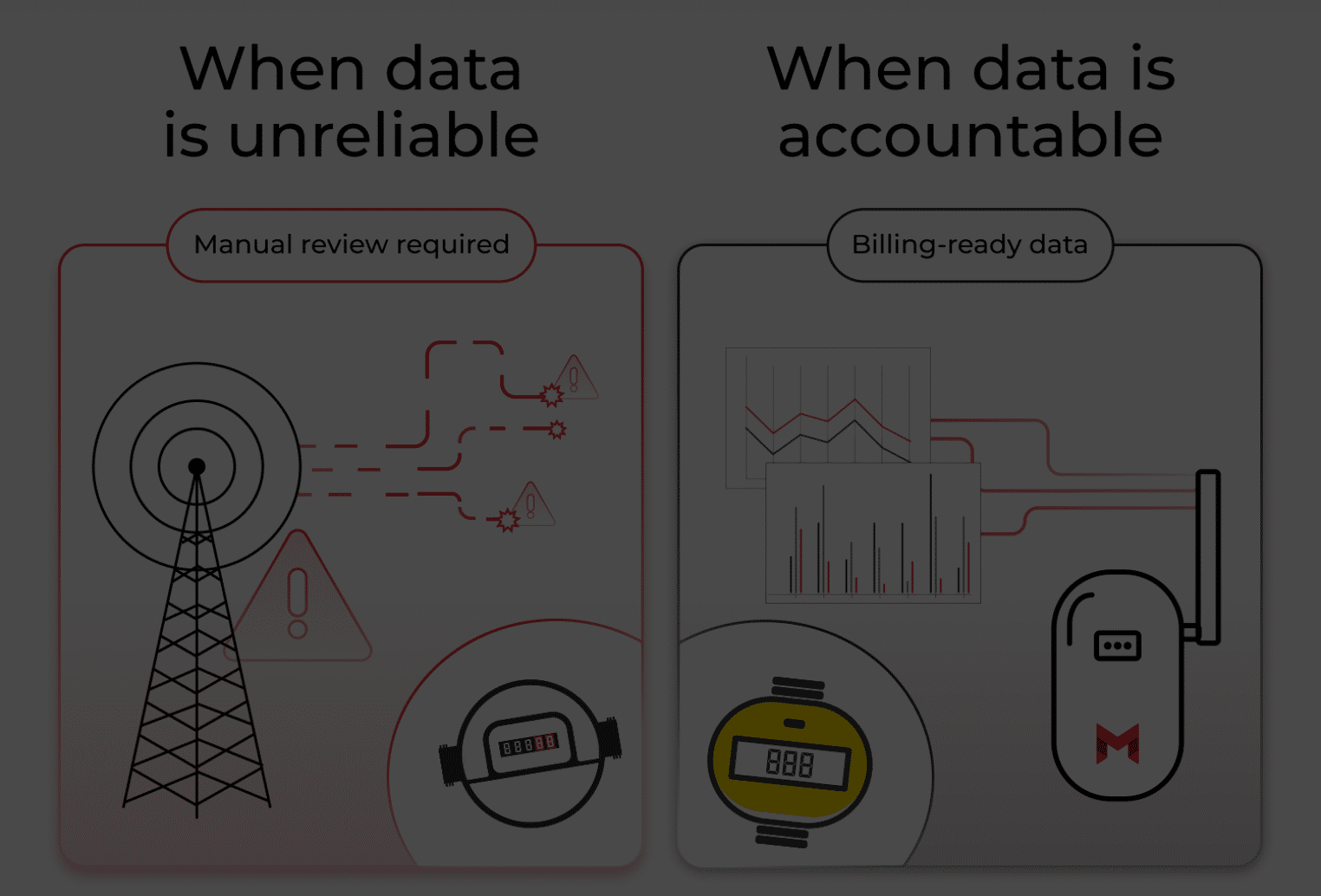
Most Billing Problems Don’t Start at the Invoice
2026-01-14
LoRa vs LoRaWAN: Key Differences Explained
2026-01-27LoRaWAN is a low-power, wide-area network (LPWAN) specifically designed to empower and enable large-scale IoT deployments. The growth of IoT devices has been enormous; however, early adoption was hindered by power requirements. Capable of long-range transmissions at low power, LoRaWAN is a game-changer for large-scale IoT deployments and has been widely adopted across a diverse range of industries and contexts.
Enabling remote monitoring of assets and utilities, LoRaWAN improves operational efficiency and reduces infrastructure and maintenance costs. Smart water metering is a proven core use case of LoRaWAN, and its efficacy makes it suitable for a diverse range of applications. This article will examine the role of LoRaWAN in its diverse applications worldwide, including water metering, energy management, agriculture, logistics, and smart city infrastructure.
What is LoRaWAN and Why Does it Matter?
LoRaWAN is an acronym for Long Range Wide Area Network. At its core, LoRaWAN is simply a low-power, long-range wireless communication protocol, making it effective in smart metering.
Meters, sensors, and trackers typically send small packets of information at infrequent intervals. Traditional connectivity options aren’t designed for this type of data transmission pattern: cellular networks are optimized for frequent communication and high data throughput, whereas wired networks are expensive and impractical for distributed assets.
LoRaWAN was designed specifically to solve this mismatch by optimizing for long-range, low-power, infrequent communications, where small data packets are transmitted intermittently, keeping bandwidth and power requirements low.
Its core technical characteristics are long-range communication up to several kilometers, ultra-low power consumption enabling 10+ year battery life for devices, low data rates optimized for sensor and meter data, and secure, bi-directional communication between devices and network servers.
LoRaWAN has a layered architecture, with each layer supporting a different part of its function. End devices collect the data, such as water flow in smart water metering, while gateways forward this data to a network server. The network server acts as a centralized intelligence system controlling the network-level operations. It’s also responsible for security functions. The final piece of the puzzle is the application server, which is responsible for decrypting payloads and processing, storing, or visualizing data. The application server typically outputs data to end-users, such as dashboards, alerts, or notifications.
This design means that a single LoRaWAN network can support thousands to millions of devices across multiple use cases without any reliance on telecom providers.
LoRaWAN is ideal for any application requiring low power consumption and long-range communication. It eliminates the need for frequent battery replacement or wired power while also allowing communication across large properties, campuses, or cities. Its scalable nature supports large-scale deployments, from a single building to citywide networks, and its installation and operational complexity is very low.
LoRaWAN Applications in Smart Water Metering
Traditional water metering systems rely on monthly or quarterly meter readings taken manually by someone physically attending a meter device. There is no automated leak detection, and any maintenance is simply reactive to events. This results in delayed issue detection, high labor costs, and significant non-revenue water. Smart metering solves these issues, but it requires an effective communications protocol such as LoRaWAN.
Smart water metering is a core use case for LoRaWAN. It’s a proven technology used in millions of properties worldwide, from residential homes to commercial buildings. In many ways, water metering is the ideal use case for LoRaWAN: water meters transmit small data packets at regular intervals and often require installation in locations with poor connectivity. They can often be challenging to serve with other communications methods, and installation locations may be difficult to reach regularly.
LoRaWAN-enabled water meters transmit consumption data automatically, enabling continuous, remote water usage monitoring without the need for costly or inconvenient physical meter readings. Low-power LoRaWAN connectivity aligns with long asset lifecycles, supporting multiple needs in smart water metering. A key feature of such smart water metering solutions is integration with billing and analytics platforms, a feature requiring connectivity provided by LoRaWAN.
LoRaWAN provides essential functionality that allows smart water meters to:
- Notify users about water consumption in real time
- Send leak detection and abnormal usage alerts to users
- Identify pipe bursts or flow issues early
- Support fair, transparent billing models
LoRaWAN-enabled smart water metering provides massive benefits to stakeholders, including the following ones.
- Property Owners & Managers: Fair and accurate tenant billing based on actual consumption in submetering solutions leads to fewer billing disputes and improved transparency, while automated data collection facilitates lower operational overheads.
- Utilities & Water Providers: Manual meter readings and the associated costs are totally eliminated, while automated reporting enables faster responses to leaks and system inefficiencies. The improved operational efficiency allows better resource management and easier planning.
LoRaWAN is massively scalable, supporting thousands to millions of devices on a single network, positioning it as a practical choice for apartment complexes, multi-tenant residential buildings, commercial or industrial properties, as well as citywide and regional smart water infrastructure.
Mainlink, in association with Axioma Metering, implemented a water metering solution in Húsafell, Iceland. Húsafell was well-known for its commitment to sustainability, but its water management system was outdated and did not incentivize water conservation. The 233-meter deployment utilized LoRaWAN-enabled smart water meters to reduce water consumption by 30% across the community in its first year, demonstrating the utility of LoRaWAN in a real-world setting.
Benefits of LoRaWAN for Smart Water Metering
In smart water metering, LoRaWAN is used specifically for its low-power, long-range communication capabilities. This enables long battery life for meters and sensors, supports reliable data transmission even from hard-to-reach locations, reduces installation and maintenance costs, and offers massive scalability using minimal network infrastructure.
LoRaWAN is a relatively low-cost and simple solution that offers significant flexibility, even in very large-scale IoT deployments, making it an ideal choice for smart water metering.
LoRaWAN Applications in Energy Management
Similar to smart water metering, LoRaWAN is frequently used in energy management as the communication protocol for electricity, gas, and thermal energy meters. Energy consumption frequently fluctuates, but traditional monitoring methods often aggregate data monthly, which can mask peak demand issues and provide no early warning of inefficiencies.
As energy prices rise and energy conservation becomes a consideration on both practical and regulatory levels, there is a growing demand for real-time energy visibility. LoRaWAN enables automated collection of consumption data at regular intervals.
In smart electricity and gas metering, LoRaWAN is used to enable:
- Remote monitoring of energy usage patterns, enabling time-of-use analysis
- Alerts to anomalies and inefficiencies
- Support for predictive maintenance and fault detection
These core functionalities underpin the efficacy of smart energy meters, having a significant operational impact for businesses, consumers, and utilities. The elimination of manual meter readings unlocks cost savings. At the same time, better demand forecasting and load management lead to better outcomes for consumers and improved energy efficiency for providers, buildings, and portfolios.
Mainlink’s Middle East project at Manchester Tower is an example of LoRaWAN used in energy management. The project implemented a full smart metering solution with energy meters installed across a 336-unit residential building, resulting in an estimated 20% reduction in cooling energy use due to improved monitoring and behavior change.
Benefits of LoRaWAN for Energy Management
LoRaWAN is specifically designed for IoT deployments, and its low-power nature makes it suitable for long-term, battery-powered operations, such as those seen in metering applications. LoRaWAN-enabled devices enable sustainability targets to become measurable, rather than purely theoretical, facilitating proactive energy management.
With inherent security protocols, it enables secure and reliable data transmission at a significantly lower cost than comparable approaches, such as cellular. Massively scalable, LoRaWAN is suitable for large portfolios, large-scale deployments, and utility networks.
LoRaWAN Applications in Smart Agriculture
Agriculture presents unique challenges for connectivity because many farms and other agricultural sites are spread across vast geographic areas, and there’s often limited access to both power and wired networks. Traditional management methods in agricultural settings are time and labor-intensive. These challenges mean that in more traditional setups, business owners make decisions based on averages and estimates rather than real conditions.
Perhaps more than any other industry, agriculture requires cost-effective, durable sensors that can operate on low power without compromising their range of efficacy.
LoRaWAN enables numerous capabilities in precision agriculture, including:
- Soil moisture and nutrient monitoring
- Irrigation system optimization
- Weather and microclimate sensing
- Livestock location and health monitoring
As a result of accurate tracking, agricultural business owners can enjoy reduced energy and water usage while simultaneously boosting their crop yields and livestock health through data-driven farming decisions. Resource use becomes predictable and measurable, boosting efficiency over the longer term. This increased operational efficiency can result in not only lower costs and higher profits but also considerable sustainability gains.
GAO Tek’s deployment of a LoRaWAN-enabled precision agriculture system is a good example of LoRaWAN in practice. An Oregon corn farm implemented a monitoring system to track soil health and environmental factors. The system’s continuous data flow enabled fertilization optimizations that increased crop yield by 10% while reducing chemical usage by 18%.
Advantages of LoRaWAN for Agriculture
As a protocol designed for long-range, low-power communications, LoRaWAN has multiple benefits when used in agricultural settings. These include long-range coverage across fields and large properties with minimal infrastructure requirements. The long battery life minimizes maintenance needs in often difficult-to-reach locations, enabling cost-effective IoT deployments at scale.
LoRaWAN in Logistics and Supply Chain
Logistics operations typically involve assets distributed across multiple locations, often in complex patterns and arrangements, necessitating long-term asset tracking and management without frequent battery changes or communications blackouts at inopportune times. Lost or idle assets tie up capital, impacting profitability, while in cold chain monitoring, temperature excursions can cause spoilage and result in costly compliance failures.
In logistics and supply chain contexts, LoRaWAN provides essential functionality enabling:
- Container, pallet, and returnable asset tracking
- Vehicle and fleet monitoring
- Cold chain temperature and humidity monitoring
- Equipment and tool tracking
By using LoRaWAN as a core part of the process, businesses can reduce asset losses and thefts while optimizing fleet utilization and routing. Efficient, effective tracking can improve regulatory compliance and deliver increased supply chain transparency.
Smart logistics provider TEKTELIC implemented a LoRaWAN-backed fleet management and route optimization system for a major US logistics company. The company achieved 15% fuel savings, a 20% reduction in downtime through predictive maintenance, and 10% faster delivery times across its 200-vehicle fleet as a result of implementing this LoRaWAN-based system.
Advantages of LoRaWAN for Logistics and Supply Chain
LoRaWAN provides low power consumption for long-duration tracking, ensuring that businesses can rely on their tracking and not get caught out by sudden power losses. Long-range connectivity ensures reliable connectivity in warehouses and transit environments at a lower cost than cellular. These factors deliver affordable and scalable asset monitoring, but over a longer timescale, patterns emerge from the data, allowing businesses to engage in predictive logistics and capacity planning.
In this context, LoRaWAN supports a paradigm change away from observation and towards resolution. Not simple asset tracking, but network-wide operational insights and management. Fewer personnel are required for monitoring, but those personnel who are deployed can engage in more valuable activities.
LoRaWAN in Smart Cities
Smart cities rely on data from thousands of distributed assets to operate efficiently, safely, and sustainably. These assets are diverse in both form and function: streetlights, waste bins, parking spaces, environmental sensors, and water infrastructure.
These assets are located across public spaces, roads, buildings, and utilities. Most municipal assets are geographically dispersed, must operate for years with minimal maintenance, and require only small and periodic data transmissions. Multiple departments require sensor data, but fragmented systems increase cost and complexity, leading to inefficiencies and challenges in delivery. Traditional connectivity options, such as cellular or wired connectivity are expensive or impractical for citywide IoT deployments, so many municipalities turn to other options, such as LoRaWAN.
In smart city infrastructure, LoRaWAN acts as a shared communications layer enabling multiple city services to function and cooperate on one single network. LoRaWAN in smart cities is typically used in infrastructure monitoring, environmental sensing, and smart water and utility metering.
A good example is the City of Huntington Park, California, which deployed a citywide LoRaWAN-powered smart parking network. Via parking sensors and gateways, the system provides real-time space availability to drivers via an app with reduced deployment and operational costs for the municipality by minimizing infrastructure needs thanks to LoRaWAN.
Typical applications of LoRaWAN in smart city infrastructure include:
- Remote water usage monitoring
- Leak detection and infrastructure health monitoring
- Automated billing and reporting
- Automated lighting systems
- Lamp failure and outage detection
- Real-time parking management
- Dynamic route optimization for waste collection vehicles
LoRaWAN’s impact is felt in diverse contexts, helping to conserve both water and energy, optimize waste collection, and monitor environmental conditions such as air quality, noise pollution, and flood risk. Adaptive lighting schedules reduce energy waste, while outage detection enables faster identification and repair of outages. The benefits are varied: from water conservation to waste management and even improved public safety through consistent, efficient lighting.
Advantages of LoRaWAN in Smart Cities
In smart city infrastructure, LoRaWAN enables low operating costs through shared infrastructure, allowing multiple departments and applications to share expenses. Open standards enable vendor flexibility, supporting more long-term planning and decision-making. Cities can gain a flexible, future-proof foundation for smart infrastructure investments.
While smart water metering is a significant use case, in a smart city context, the actual value of LoRaWAN emerges as additional services are layered onto the same network, creating a true smart city ecosystem. Infrastructure costs can be shared, and new services can be added to existing networks. This enables cities to transition away from disconnected smart projects towards coordinated, citywide digital infrastructure to enable data-driven urban planning and policy decisions. In this context, LoRaWAN is not just a component in IoT deployments, but as part of the foundation for long-term operations.
Why LoRaWAN is Ideal for Utilities and Property Owners
Utilities and property owners require practical, effective solutions to the common problems faced in their industries. There are significant challenges posed by asset lifecycles, vendor lock-ins, and unpredictable operating costs that mean business owners and managers assume considerable risk when choosing solutions.
As a global standard, LoRaWAN is an ideal choice for utilities and property owners. It enables long asset lifecycles that align with infrastructure investment cycles, and the operating costs are both predictable and low. Vendor-agnostic ecosystems reduce lock-in risk and enable greater versatility and flexibility in deployments.
LoRaWAN is an ideal solution in this context because it offers:
- Long battery life for devices
- Wide coverage in urban and rural areas
- Low operating costs
- Scalable deployments
- Simplified infrastructure
Smart water metering is a practical entry point to adopting LoRaWAN-enabled IoT solutions. As a proven use case, smart utility metering solutions provide a practical testbed for LoRaWAN IoT deployments, supporting significant returns through reduced operational budgets, decreased water consumption and waste, and improved resource allocation. As a vendor-agnostic platform, LoRaWAN enables easy expansion into energy, gas, and other utility metering, facilitating the creation of a truly unified smart metering ecosystem with seamless integration.
Conclusion
LoRaWAN is not just a simple connectivity choice; it’s an investment into a long-term operational strategy that enables proactive management instead of reactive responses. LoRaWAN enables numerous strategies providing multiple tangible benefits in diverse settings. As a global standard, LoRaWAN has transformed utilities, agriculture, logistics, and smart metering approaches, proving its reliability and commercial viability time and again.
If you’re a property owner, manager, or utility looking to start with smart water metering, Mainlink’s supplied smart ultrasonic water meter, provided in partnership with Axioma Metering, is a good place to start.
For more information read our article on LPWAN vs LoRaWAN.


