


ISS Poland Shares Experience on Mainlink’s Temperature Monitoring Solution Powered by IoT
2023-11-23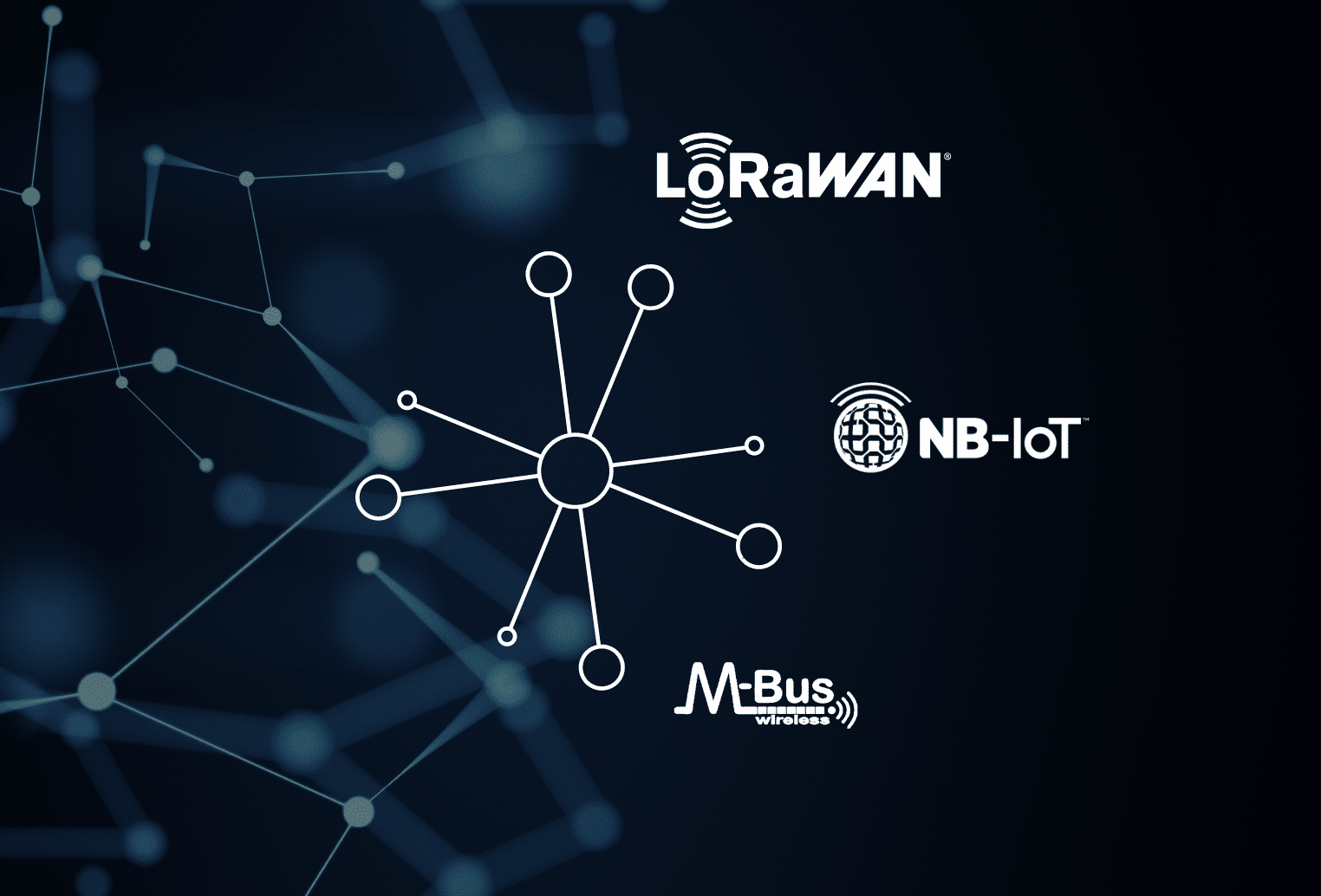
Choosing the Right Communication Network for Submetering: Why LoRa Stands out
2024-02-09Submetering is the practice of installing secondary utility meters at individual units downstream from a master meter to measure specific consumption at the unit or tenant level in apartments, commercial units, mixed-use buildings, or industrial settings.
Submetering covers all utility types: water, gas, electricity, and thermal energy. Submetering enables usage-based utility billing, in which tenants receive bills based on their own consumption. It enables precise tracking of consumption data, greatly enhancing visibility, and supports both resource conservation and operational efficiency.
In this article, we will explore in more detail exactly what submetering is, how it works, how it’s used, and what tangible benefits it offers stakeholders.
What is Submetering?
Submetering is the process of installing individual meters downstream of a master meter in order to track individual utilities usage at a much more granular level, enabling unit-level consumption tracking and individualized billing while improving individual accountability.
Typically, the main utility meter (the master meter) is utility-owned, while submeters are property-owned; the California Civil Code defines a submeter as “a device that measures water consumption of an individual rental unit […] owned and operated by the landlord.” However, this is not always the case.
Submetering is utilized extensively across all major utility types: water, gas, electricity, and thermal. This form of individual metering supports fairer cost allocation in multiple contexts, including multifamily housing, mixed-use developments, and commercial developments. Since submeters collect granular, individual unit-level consumption data, they can be used in diverse contexts to support utility cost recovery, ESG and sustainability reporting, and operational efficiency.
What is a Submeter?
A submeter is the actual physical meter installed to monitor utility consumption at a particular unit. It sits downstream of the master meter serving an entire building or property. While the utility company owns the master meter, submeters are typically owned and operated by property owners.
In the practical, real-world example of a multifamily apartment building, this means a master meter (for water, gas, or electricity) is installed where the utility enters the building, as usual. Then, in addition to the master meter, individual submeters are installed per unit. Each unit will have its own gas, water, electricity, or thermal submeter.
Meter types vary by utility. The difference between meter types is generally based on how they measure consumption. In water submetering, for example, common submeter types include ultrasonic meters, which measure water volume and flow using ultrasonic waves; in gas submetering, thermal mass flow meters can measure the cooling of gas as it passes across a heated sensor. While gas and water meters and submeters can operate according to the same principles, electric meters require an entirely different approach.
There are multiple methods available, and therefore, there are many different types of submeters.
How Does Submetering Work?
How exactly do submetering systems work? After installing and setting up a brand-new submetering system, what happens next? Let’s take the example of apartment submetering, where multiple individual units are served by master meters in one building.
Step 1: Utilities Enter and Get Tracked By the Master Meter
Utilities enter the property as normal. The utility-owned master meter will still track building- or property-level utility consumption, as it did before the submetering system was installed. The utility company will still bill for the utility consumption.
Step 2: Submeters Measure Individual Consumption
Tenants, units, or other utility consumers will still receive their utility as normal. The difference is that each unit has been equipped with a submeter that measures its individual utility consumption. This individual metering enables much more precise consumption tracking; in our apartment context, this means individual apartment units, but for an industrial setting, this could also mean precise tracking at the level of individual pieces of equipment.
Step 3: Data is Collected
Many modern submetering systems are highly automated smart systems, typically referred to as Advanced Metering Infrastructure (AMI). These systems will automatically collect consumption data and send it for processing through wireless connectivity (e.g. LoRaWAN), eliminating the need for manual meter readings or inspections.
Automated Meter Reading (AMR) systems can automate part of the data collection process by eliminating individual manual meter readings without leak, burst, freeze and other anomalies detection.
Some legacy submetering systems utilize neither AMR nor AMI and require full manual data collection and transmission from each submeter in a given unit.
Step 4: Billing & Analytics
Billing and analytics are key areas where submetering differs significantly from traditional master-meter-only approaches. Instead of only understanding how a whole building or property uses a utility, submetering provides much more granular data.
One key benefit of this approach is that systems can identify diverse kinds of anomalies, such as irregular usage patterns and leaks, and send immediate alerts to system managers.
Submeter data can also be used for advanced billing processes via integrations with billing software and services. In the apartment context, this means tenants can be billed for the precise quantity of utility used. This allows fairer cost allocation and improves billing transparency.
In industrial or commercial settings, granular consumption data enables much better visualization of resource consumption because consumption data includes individual unit usage, supporting a broad range of initiatives and uses.
Types of Submetering by Utility
Submetering systems differ depending on the utility being measured. Although they all broadly seek to solve the same problem of granular consumption data collection and visibility, differences between utility type delivery, usage context, and fundamental physical nature mean that submetering systems differ. Here, we’ll consider submetering types by utility.
What is Water Submetering?
Water submetering is the process of measuring individual unit-level water consumption across a property, such as a multifamily housing development, a mixed-use building, or a commercial or industrial property. This type of submetering is increasingly common, especially in multifamily housing and apartment contexts. Water submetering involves installing a water submetering system to provide precise consumption data and advanced analytics, such as leak detection.
Utility companies still measure water consumption at the master meter, but submeters provide owners with much more granular data that can support a wide range of purposes, including utility cost recovery, fair billing, and water conservation initiatives.
What is Electric Submetering?
Electric submetering is the process of measuring individual unit-level electrical utility consumption across a property, so that specific tenants, units, departments, or equipment can be billed individually. In many deployments, electric submeters are connected directly to individual breaker panels or electrical circuits to track energy consumption separately per tenant or system.
The utility still tracks property-level consumption at the master meter, but submeters provide granular data for property owners and managers that can support more precise billing or analytics.
This type of submetering is extremely common in commercial and industrial properties, but can also be used in residential contexts. It’s commonly used for demand monitoring and forecasting, as electrical submetering helps operators understand where and how energy is used, allowing them to allocate utility costs more accurately. With the increasing popularity of electric vehicles, some apartment communities and commercial parking facilities utilize electric submeters alongside EV charging stations for more accurate billing.
What is Gas Submetering?
Gas submetering is the process of measuring natural gas usage for individual tenants, units, or systems within a property using individual submeters installed at the unit level. Gas submetering is common in multifamily housing contexts, mixed-use buildings, and commercial properties with shared utility infrastructure.
Gas submetering is especially useful in shared-use contexts with central heating systems, as it enables and encourages greater tenant accountability, since bills are based on actual usage rather than theoretical allocations. In shared boiler systems, property owners may opt for either gas or thermal submetering, depending on the heating infrastructure configuration.
Gas submetering can pose a challenge in retrofit contexts, as gas infrastructure is often centralized, aging, and difficult to separate in ways that water or electricity are not.
What is Thermal Submetering?
Thermal (or heat) submetering measures the amount of heating or cooling energy consumed by individual units, tenants, or systems within a building or larger property. Instead of measuring water or gas volume or electricity flow, thermal submeters measure energy transfer.
Thermal submetering systems are commonly used with water-heating systems, district energy systems, and large commercial properties. In district heating systems, thermal submeters help allocate heating costs across multiple buildings connected to a centralized energy plant.
Benefits of Utility Submetering
The core purpose of submetering is to measure actual utility usage at the tenant, unit, or equipment level, enabling more accurate cost allocation and more efficient consumption management. This is a purpose shared across utility types. Therefore, the key benefits of submetering involve billing, visibility, and operational efficiency.
- Accurate, usage-based billing:
Fair, accurate, and transparent bills for tenants or consumers reduce billing disputes and improve tenant satisfaction
- Better cost recovery for property owners:
Owners can pass utility costs directly to those tenants generating them, unlike in RUBS allocations, where owners may be left responsible for substantial portions of the utility bill
- Reduced utility consumption:
Studies show residents in submetered contexts use less of a utility than residents in a comparable unsubmetered context, a change primarily driven by greater personal accountability
- Enhanced visibility:
Submetering systems offer greatly enhanced visibility into utility systems, with the ability to view comparative usage histories, visualize utility usage according to zones, departments, or specific units, to support a wide range of purposes at portfolio-scale
- Advanced leak & anomaly detection:
Granular, continuous consumption data supports immediate detection of anomalies such as leaks or irregular usage patterns, enabling swift responses
- Increased property value & NOI:
Increased operational efficiency, better ESG metrics, and improved NOI through reductions in utilities usage and improved cost recovery are attractive to investors
- Regulatory & sustainability requirements:
Submetering can ensure compliance with various local or state building policies, as well as sustainability reporting requirements
Metering vs Submetering: What’s the Difference?
Metering measures total utility consumption for an entire property, whereas submetering measures usage for individual units, tenants, or systems within that property. This is the central, foundational difference between metering and submetering, though there are others.
Other differences include infrastructure ownership, billing, changes to utility consumption visibility, accuracy, and conservation impact. Here, we will consider all of these differences with an easy-to-read comparison table.
| Feature | Master Metering | Submetering |
| Ownership | Utility company | Property owner |
| Billing | Shared/RUBS allocation | Actual usage |
| Visibility | Building-wide | Unit-level |
| Accuracy | Lower accuracy | Higher accuracy |
| Conservation Impact | Limited | Strong |
Submetering vs RUBS
Traditional metering typically uses shared allocation systems to allocate theoretical responsibility for costs between units in a multi-unit property. A common shared allocation system is the Ratio Utility Billing System (RUBS), used most often in multifamily apartments and student housing, which is a formula-based allocation that allocates costs based on occupancy and square footage. Similar methods, such as Common Area Management (CAM) charges, are also used in certain commercial and mixed-use properties in the absence of submetering.
For property owners, this choice — submetering vs RUBS — is often framed as a simple decision about billing mechanisms, but it has a much deeper impact. Here’s a quick comparison table of the differences between submetering and RUBS:
| Feature | RUBS | Submetering |
| Billing accuracy | Calculated using formula and distributing evenly | Highly accurate; determined through actual utility consumption |
| Utility cost recovery | Poor | Very high, as tenants pay for the utilities they use |
| Conservation Impact | Limited | High |
| Tenant satisfaction | Poor; disputes common | Higher; disputes less common |
Challenges of Utilities Submetering
Although submetering offers many realistic and tangible benefits, successful deployments come with challenges, whether through new builds or retrofits. These challenges can be managed by working with experienced providers. The challenges typically cluster into three areas: installation & rollout challenges, operational concerns, and regulatory requirements.
Installation & Rollout Challenges
This area is a common source of anxiety for property owners looking to implement submetering systems across their properties or portfolios. Typical concerns involve upfront installation costs and retrofit complexity.
- Upfront deployment & installation costs
Full deployments can come with a higher upfront cost, but this should be weighed against improvements in utility cost recovery, reductions in utility consumption, and increases in property value and NOI. The ROI for submetering systems is generally high.
- Retrofit complexity
Many existing properties have plumbing and wiring systems that complicate retrofits. In some cases, this can add a high additional cost and make certain implementations impossible. While working with experienced providers can make retrofits less complicated, there are always risks and challenges when adapting older properties.
Operational Concerns
Operational concerns, such as ongoing maintenance and tenant communication, are another common challenge for owners switching to submetering systems.
- Ongoing maintenance
Many owners worry about the potential for high ongoing maintenance costs after switching to submetering. While this is a fair concern, many submetering systems enable better allocation of maintenance budgets by providing extensive visibility into utility consumption across a portfolio. Some submeters, such as ultrasonic water meters, are extremely low-maintenance; by working with an experienced provider, it’s possible to design a low-maintenance system that supports better resource allocation and saves money over the long term.
- Tenant communication & onboarding
Tenant communications and onboarding can pose significant challenges, as tenants may be resistant to changes in their billing systems. Some tenants may feel that switching to submetered billing will necessarily result in higher bills, while others distrust the technology itself. Such tenant concerns can be challenging for owners to navigate, especially because some tenants will receive higher bills after switching. Tenant-centered education approaches are a good option: when tenants understand exactly how the system works, and that their billing is solely based on their own utility consumption, this improves personal accountability and leads to changes in usage behavior.
Regulatory Requirements
The regulatory environment surrounding submetering can be challenging to navigate, especially for inexperienced owners or those with portfolios spread across multiple jurisdictions.
- Differing state requirements
In the US, there is no single federal mandate requiring submetering. States, regions, and more local jurisdictions each have their own regulations, resulting in a patchwork of different requirements that can be difficult to navigate. It can be challenging to implement an effective system in this context, especially given that regulations can vary across jurisdictions.
- Compliance complexity
Some owners worry about how difficult it can be to meet submetering regulatory requirements in their region and whether regulations specify implementation methods that won’t work for them. Partnering with a trusted, experienced provider can simplify rollouts.
Where is Submetering Used?
Submetering is used across industries in many different contexts. It’s a vital tool wherever shared utilities require more granular tracking and cost allocation.
Apartment Submetering
In apartment buildings, submetering is an essential tool for utility cost allocation and resource conservation. This is one of the most widely understood use cases for submetering. Individual utility submeters are installed per unit to track unit-level consumption. Large apartment communities with centralized utility systems are especially good candidates for apartment submetering, as the many self-contained units mean that cost recovery, utility visibility, and billing allocation can be greatly improved by submetering. In these contexts, submetering can have significant positive impacts on resource conservation by promoting tenant accountability.
Multifamily Submetering
Multifamily submetering is the implementation of submetering across apartment communities, condo developments, student housing, and large residential portfolios. Submeters are installed at logical units across the multifamily property to track individual utility consumption. Submetering enables portfolio-scale management in this scenario, allowing operators to use consumption data much more strategically to enhance cost recovery, recover utility losses, and improve operational efficiency.
Commercial Office Buildings
In this context, submetering enables dedicated consumption tracking for individual tenant suites, floors, or departments within an office building. Submetering can cover shared utility infrastructure such as central HVAC systems, common water infrastructure, and shared electrical services. Submetering is increasingly popular in commercial office settings because it enables more precise billing and can improve corporate ESG metrics.
Mixed-Use Properties
Mixed-use properties combining residential, commercial, hospitality, or entertainment spaces face unique challenges in allocating utility costs. A single master meter often serves multiple occupancy types, and traditional billing approaches (e.g., RUBS for residential, CAM charges for commercial) are often wholly unsuitable in this context. Residential tenants have different utility usage patterns than commercial tenants. Submetering enables each tenant type to pay for its specific and actual utility consumption, supporting tenant satisfaction and operational fairness.
Mobile Home Parks & HOAs
Mobile home parks and HOAs provide unique challenges for utility management due to the spread-out nature of the sites. Maintenance and management can be difficult and labor-intensive in traditional approaches. In this context, submetering is an effective tool that greatly improves visibility over the whole system.
Industrial & Manufacturing Facilities
Industrial submetering is an extremely effective management tool used across industries and utilities to provide comprehensive consumption data for vital strategic decisions. In an industrial context, submeters can be used to monitor machine-level utility usage or usage at specific assembly lines. The collected data can be used for peak demand tracking, load balancing, and various operational efficiency processes, as well as for sustainability and ESG monitoring.
Federal & Government Buildings
Federal and government buildings make extensive use of submetering for similar reasons as other large properties, but there is an additional regulatory reason. ASHRAE 90.1 requires that buildings over 25,000 sq ft implement submetering.
Submetering Regulations in the US
Submetering regulations in the US are fundamentally piecemeal and fragmentary; there is no single federal submetering law. Regulations are provided at the state or local level. Some states may highly regulate one utility, and have no specific provisions for another. To properly contextualize the highly variable nature of submetering in the US, we can look at four states: California, New York, Colorado, and Texas.
California
California has a clear statutory framework for residential water submetering, but this is limited in scope and doesn’t establish a universal submetering regime across all utilities. California state building codes require individual water metering or submetering in certain new multifamily contexts, and where submetering is implemented, there are rules around installation and operation, tenant billing based on actual metered usage, transparency requirements, and owner responsibility for meter and system maintenance and compliance.
New York
Formal regulatory control in New York is strongest in residential electricity submetering. In residential buildings, electricity submetering requires approval by the New York Public Service Commission (PSC). However, other utility submetering arrangements are generally governed through design approvals, local arrangements, and utility tariffs.
Colorado
Colorado has no single statewide statute that comprehensively defines and governs submetering across property types or utilities; its regulatory framework around submetering is highly decentralized and emerges through a combination of local building codes, housing finance and development program requirements, and general landlord-tenant and consumer protection laws. Submetering is implemented in accordance with project- and utility-level decisions.
Texas
Texas regulates submetering through explicit statutory authorization alongside detailed operational and billing requirements. Property owners are explicitly permitted to implement submetering systems in multifamily housing contexts, and submetering is a legally recognized method of utility allocation. Rather than imposing a single mandate for submeter installation, Texas operates under a compliance structure in which property owners must either measure consumption through submetering systems or apply regulated allocation methods for cost recovery.
How to Get Started with Submetering
The first step is evaluating your building’s existing infrastructure. This means checking the plumbing layout, electrical risers, and other infrastructure to assess the feasibility of a retrofit. At this stage, you don’t need to select a provider, but seeking expert advice can be helpful.
Next, you need to consider state and local laws. As discussed, the regulatory framework for submetering can be complicated and highly variable, so it’s important to check what’s allowed and what’s required before starting.
After that, you’ll want to select a trusted, experienced provider to help with installation and data management. Then you’ll want to set up billing and tenant communication systems.
Talk to our expert team to evaluate your property to get started today.
Frequently Asked Questions
What is the meaning of submetering?
Submetering is the process of measuring utility consumption of individual units in a larger property, such as an apartment building.
What is the purpose of a submeter?
A submeter is intended for measuring the individual utility consumption of a particular unit for accurate cost allocation in billing.
What is the difference between metering and submetering?
Metering measures utility consumption for an entire building or property, whereas submetering measures consumption for individual units within a building or larger property.
What are the disadvantages of submetering?
Submetering can come with higher upfront costs, and it can sometimes be difficult to implement in retrofit projects. Compliance can be complicated and differs depending on region.
Does submetering save money?
Submetering is an effective tool for utility cost recovery and utility conservation, which can save money in the long term through greater operational efficiency and reduced waste.
Who usually pays for submeter installation?
The property owner typically pays for submeter installation, though subsidies may be available through state or regional programs.