

What is Submetering? Definition, How It Works, Types & Benefits
2024-02-05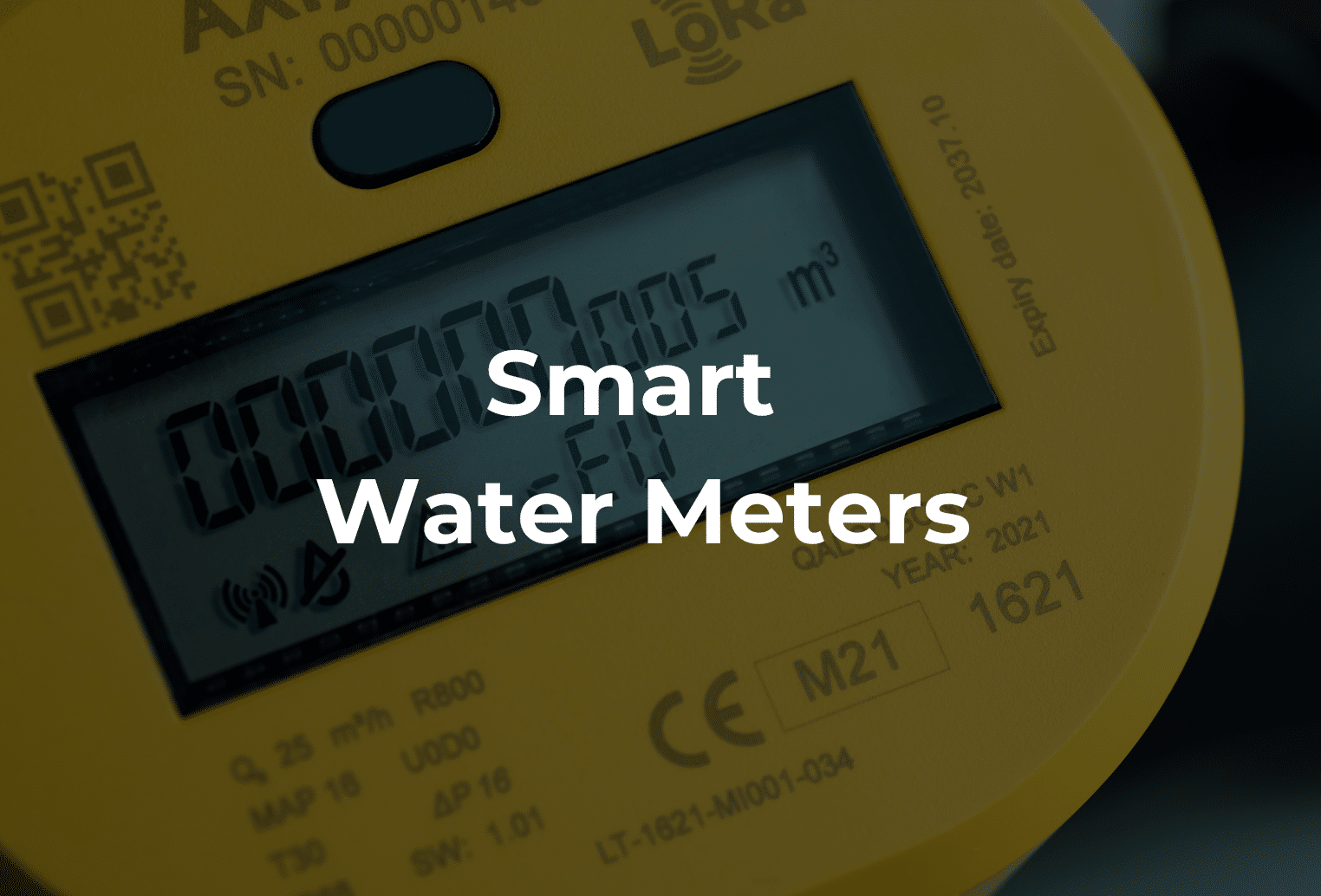
Smart Water Meters: What They Are & How They Work
2024-02-23In the rapidly developing field of smart metering, choosing the best communication network for smart meters is essential. It’s crucial for submetering businesses looking to reduce operating expenses and maximize efficiency. However, it can be difficult to make an informed choice given the abundance of options available. These options include NB-IoT, WM-bus, and LoRaWAN. With the world increasingly adopting smart IoT solutions, submetering enterprises, in the face of rising smart IoT adoption, must opt for robust communication networks to maintain competitiveness.
Is LoRaWAN suitable for submetering?
LoRa technology (long-range, low-power data transmission) is the driving force behind LoRaWAN or Long Range Low Power Wide Area Networking protocol. This protocol extends LoRa technology, providing additional functionality such as message routing, device management, and security. Which makes it appropriate for IoT (Internet of Things) applications like smart metering.
Among the available technologies, the LoRa WAN stands out for its exceptional range, low power consumption, and cost-effectiveness. LoRa WAN’s ability to penetrate dense urban environments and reach underground installations makes it an ideal choice for submetering applications. Its long-range capabilities connect even the most remote meters, while its low power requirement extends battery life. By leveraging LoRa WAN, submetering companies can offer smart ultrasonic water meter solutions that are reliable and also sustainable.
Comparing Communication Technologies
NB-IoT: While NB-IoT offers significant advantages for submetering, such as strong data capacity and good coverage,
operating expenses and the availability of cellular services can greatly impact its viability. This is because it depends on the operator’s infrastructure. NB-IoT can handle data over long distances and offer extensive coverage, especially in rural regions. However, the associated greater energy demands and operating expenses may offset the benefits. Submetering enterprises considering smart metering solutions must weigh the technology’s potential for wider connectivity against its disadvantages, which include higher prices and energy consumption. Additionally, NB-IoT can deplete a smart meter’s internal battery more quickly than LoRaWAN meter’s.
WM-bus: Meter reading applications predominantly use Wireless M-Bus, especially in Europe. However, its range is insufficient for widespread submetering deployments. Its functionality mostly limits short-range communication in crowded spaces, like apartment buildings. It uses a wired mesh network, posing challenges for scaling and deploying in retrofit scenarios. Although it has a strong presence in Europe, large-scale submetering deployments that require greater network flexibility and coverage may find it less suitable due to its restricted range and scalability compared to LoRa WAN.
Advantages of LoRaWAN Network for Submetering: Beyond Just Range and Cost
LoRa-based network for submetering offers businesses a powerful tool to reduce costs and boost efficiency, but its benefits extend far beyond these initial advantages. Here are some more benefits and applications of LoRaWAN.
- Unshakeable Network Resilience: LoRaWAN has a special spread-spectrum technology. This makes it extremely resilient to disturbances caused by both natural and man-made events. Unlike traditional networks that are prone to interference. This results in stable data transfer, reducing lost connections, and guaranteeing accurate readings even in demanding urban settings or subterranean installations. However, it’s important to note, that like for any radio frequency water is the biggest enemy. Water quickly absorbs higher frequency signals, and they do not penetrate well. Therefore, if the meter is in a flooded pit, an endpoint is necessary for optimal connectivity.
- Scalability for Growth: When your submetering company takes off, the last thing you want is for your communication network to get in the way of your growth. LoRaWAN expands to handle more meters with ease, so it can easily keep up with your growth trajectory without requiring expensive network modifications. You may grow confidently with this future-proof method, unrestricted by network constraints.
- Openness and Flexibility: LoRaWAN operates best on an open-source base, in contrast to proprietary networks. This results in unmatched affordability and flexibility. It grants you the freedom to choose from a broader range of suitable products and services. You are not restricted to a particular vendor. With no limitations imposed by individual providers, this open environment guarantees that you maintain control over your submetering ecosystem and encourages innovation.
- Integrated Security: In the linked world of today, data security is critical. LoRaWAN incorporates strong security features such as device authentication and end-to-end encryption to safeguard your vital submetering data from unauthorized access. These integrated security layers safeguard your private consumption data, providing priceless peace of mind.
Conclusion
The utility smart metering industry continues to evolve, underscoring the importance of selecting the right communication technology. LoRa WAN emerges as a compelling choice for water and heat submetering, offering a unique combination of range, battery efficiency, and cost-effectiveness. For submetering companies looking to deploy smart IoT solutions, LoRa WAN provides a scalable, reliable, and sustainable option that meets the demands of modern utility management.
As a member of the Lora Alliance, Mainlink stays informed about the latest network technologies and use cases, greatly enhancing our ability to provide optimal solutions to the clients.
Contact our team today to customize our submetering solution according to your business needs.